#1
LET’S READ!
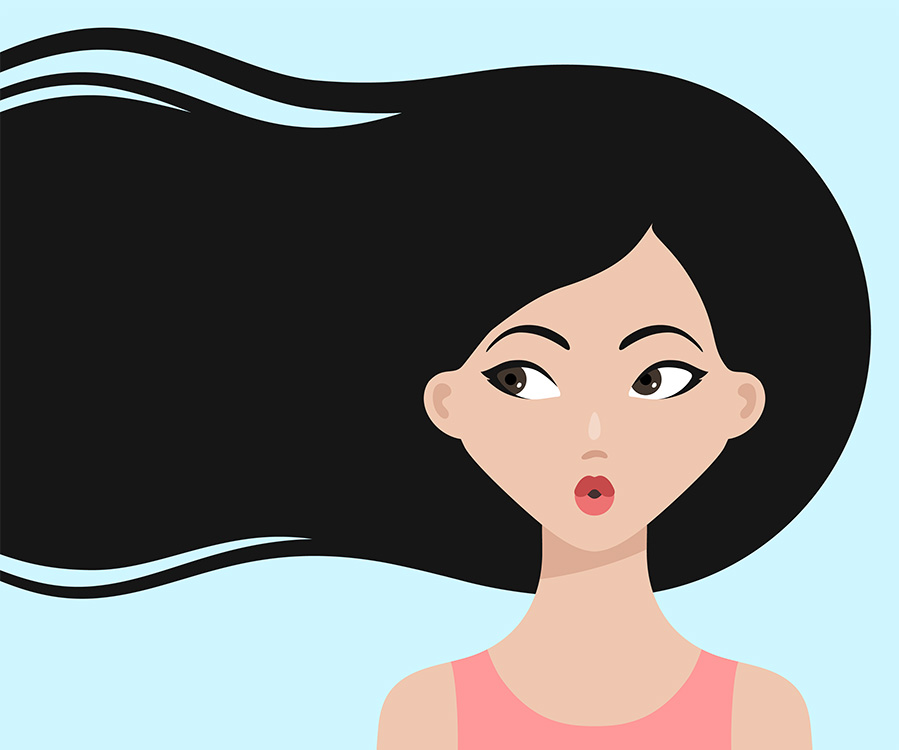
Everyone has hair. You might be thinking: well some people are bald! That’s true, but they still have little tiny hairs on their heads, and they probably have hair on other parts of their body like their legs or armpits. Everyone has hair!
Why do humans have hair? Because we’re mammals! But most mammals have hair all over their bodies, and we’re the only ones that grow more hair in some places than others. We grow hair on our legs, our arms, and in our armpits, but we have the most hair on our heads.
Mammals need fur. At night, it keeps them warm, and during the sunny day, it protects their skin from the sun’s rays. Because our ancestors discovered how to start fires, build shelters, and sew clothing, the need for fur ended, and we evolved into mammals with smaller amounts of hair.
Scientists theorize that there are a couple of reasons why it was good for us to shed our fur and live nearly hairless, such as the fact that a full coat of fur would have made us overheat during summer. Another theory is that the lack of hair leaves us less vulnerable to invasive bugs such as ticks!
LET’S TALK!
1. What is your hair like? (Thin, short, thick, dark, curly?)
2. What do you think it would feel like to have hair all over your body?
3. What color is your hair? What animal would you look like if you had fur instead of hair?
#2
LET’S READ!
Throughout the years, people have come up with a lot of different ways to style their hair, and many of those styles become extremely popular for a time. We call these styles “trends.” Let’s talk about some of the hair trends in the last century!
In the 1920s, flapper hair was all the rage. Women often wore their hair bobbed or clipped up onto their head, while men slicked their hair back with gel.
Throughout the 1930s, 40s, and 50s, mens’ hair stayed the same, but women began to grow their hair out much longer than the flapper style. Big curls, often ones pinned back from the face, were very popular.
The 60s and 70s got crazy! Hair got big for both men and women, and shag styles were very popular. Men began growing their hair very long–to their shoulders and even sometimes longer than that!
Then in the 1980s, hair got really big. Men kept their long hair and adopted curls, and women opted for massive waves and sometimes even teased their hair to get the volume they wanted.
In the 90s, hair got choppier and a little shorter, and in the 2000s, the sweeping straight styles we’re used to seeing now began to gain popularity. Since then, they’ve been the norm. Hairstyles have changed a LOT in the last hundred years!
LET’S TALK!
1. Do you like short hair or long hair?
2. How do you like your hair to be styled?
3. Do you like flapper hair, 60s hair, 80s hair, or current hairstyles more?
#3
LET’S READ!
We have about 5 million hair follicles on our bodies. We’re born with them, and we can never lose any of them or grow more of them. And hair doesn’t just keep us warm; it protects us!
For instance, we have hair on our heads to regulate our brain’s temperature. Our brains are big and they need to stay cool, and hair keeps excess heat away from our brain and allows our sweat to evaporate faster. Hair keeps our brains safe!
Not only that, but our eyebrows allow us to express emotions to those around us. We raise our eyebrows when we’re surprised, and we lower them when we’re sad. And our eyelashes are little pieces of hair that keep dirt and dust out of our eyes.
The rest of our body has tiny little hairs that aren’t visible. These hairs are very important because they help our skin heal properly. They hold stem cells, which help our bodies heal their wounds!
LET’S TALK!
1. Do you shave any of your hair? Why or why not?
2. Do you have hair on your arms?
3. Do you like facial hair? Tell your child why or why not. What do you think is the point of having facial hair?
#4
LET’S READ!
Lots of people like to change their hair color, and this trend isn’t new; people have been dying their hair since the times of ancient Egypt! Egyptians applied henna to their hair to dye their grays. And the first permanent hair color ever, which was jet black, we owe to Rome. Some civilizations even used hair color on the battlefield to show their rank and intimidate the enemy.
Hair dye was actually invented by accident by a man named William Henry Perkin. Perkin was an English professor, and he was trying to come up with a cure for malaria when he made the dye!
But what if you have dark hair? Well, you can still change your hair color! Bleach peels the color off of each strand of hair, turning it lighter orange or yellow. Then, you can put the dye on top of that color to end up with the color you want. It’s a complicated chemical process that people have to go to school and study for years to do well, so that’s why women often pay top dollar to those who dye their hair!
LET’S TALK!
1. If you could have rainbow colored hair, would you?
2. Do you like light or dark hair better? Why?
3. Have you ever dyed your hair before? If so, did you like having different colored hair? If you haven’t dyed your hair before, do you want to one day? What color would you choose?
VOCABULARY WORDS:
hair, product, shine, short, long, curl, straight, wavy, frizzy, thick, thin, wispy, gel, style, cut, trim, shape, buzz, shave, wax, comb, brush, braid, knots, wash, stylist, barber, shampoo, scissors, salon, color, treatment, conditioner
ACTIVITIES:
• Take out some yarn, or pick some up at your nearby craft store. Then encourage your child to draw humans and animals and have them glue pieces of yarn onto their pictures for hair and fur!
• Do you have extra yarn? Cut long pieces off to hang over your child’s current hair. Use different colors and lengths, and let your child stand in front of the mirror and watch as you style their hair. Then take a few photos so you can remember the fun hair later!
• Take one of your child’s picture books or a family photo album. Ask your child to point out who has hair, be it animals or people. Ask your child about objects that don’t have hair (i.e., does this chair have hair, or the door?).
RESOURCES:
1. How Your Hair Grows? – The Dr. Binocs Show (YouTube Video)
2. What If We Stopped Washing Hair? (YouTube Video)
3. Princess Brushes Her Hair (YouTube Video)
4. Billy’s First Haircut by Danielle Romano (Tate Publishing, 2010)
5. Ella Kazoo Will Not Brush Her Hair by Lee Fox (Walker Childrens, 2010)
6. I Love My Hair by Natasha Anastasia Tarpley (Little, Brown Books for Young Readers, 2001)
7. Tangled (DVD, Walt Disney Pictures, 2011)