
by Rolli –
There was a girl. A pretty girl. Why don’t we call her Corbelle? Names aren’t important, anyway.
Corbelle was lucky. She was pretty. Her father wasn’t rich, no, though he wasn’t poor, as so many were in those days. She was a fortunate girl. But she did not feel fortunate. For she didn’t have a golden pin.
One morning she was sitting on her front lawn. This was where she did most of her daydreaming. As she sat there dreaming, a girl walked past. It was Josette, who lived next door.
“What is that?” Corbelle asked. For something glinted in Josette’s hair.
“It is a golden pin,” Josette said proudly.
“Where did you get it?” Corbelle was fascinated.
“Le Petit Monde,” said Josette. That was the shop for young girls in those days. “Two hundred francs. My father bought it for me.”
Corbelle was hardly listening, though. She could only stare at the lovely pin, wishing it was her own.
“I am the luckiest girl in the world,” Josette said with a grin. It was the sort of grin, though – do you know it? – that is at once lovely and sharp. Like a rose. And like a rose on water, Josette floated down the street.
Of course Corbelle ran to her father and asked him if she too could have a golden pin. Of course the man said no, no, it was silly. Besides, there was no money for it. And of course Corbelle stormed into the backyard and seated herself on the tree swing where she did most of her sulking.
“It is a lovely day,” a voice said.
“Terrible,” said Corbelle, without even looking to see who it was.
“Oh, I wouldn’t say that. The sun is shining, the trees are blossoming, and there are plenty of nice long worms to eat.”
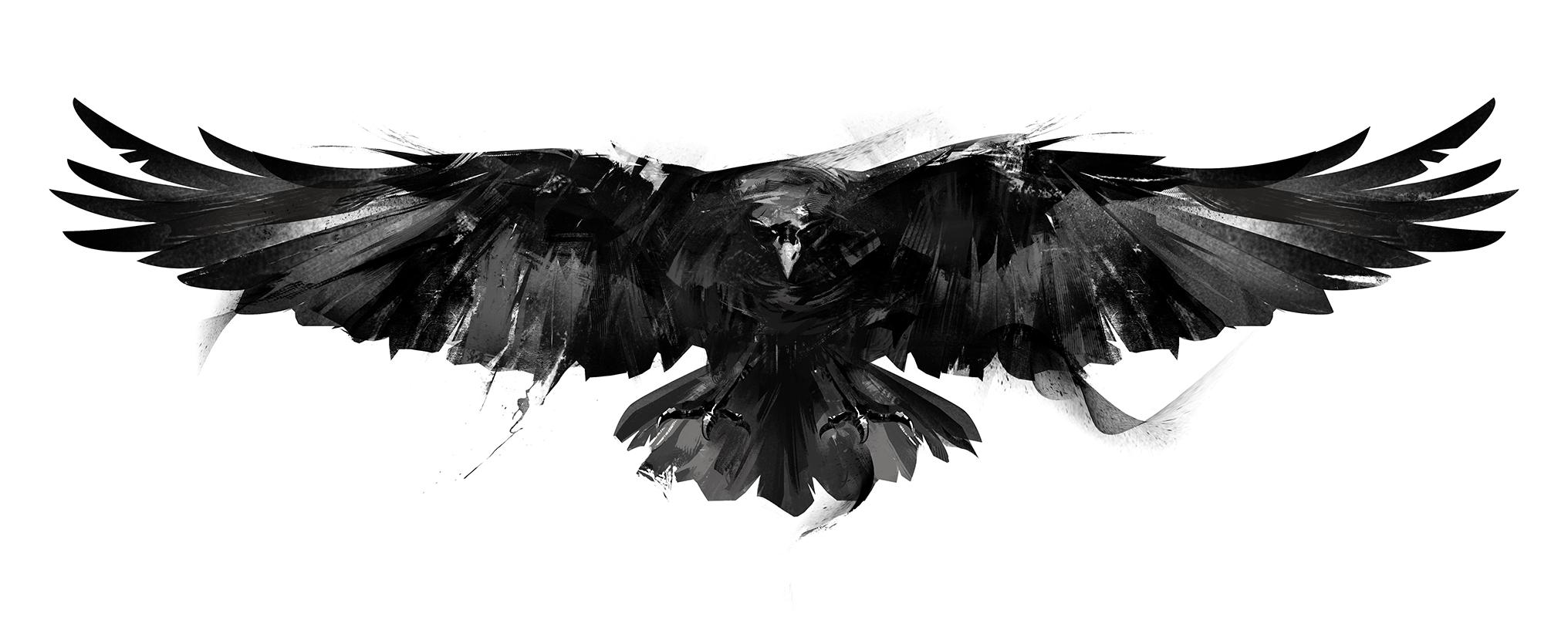
It was such an odd thing to say, Corbelle looked around to see who on earth was speaking. All she could see, though, was a fat crow sitting in the branches above.
“Well?” said the bird. “Are you going to tell me what’s troubling you, or not?”
Though a talking crow, even in those days, was a very strange thing, Corbelle was so upset she told the bird all about the pin and her father’s refusal. She was so emotional, she broke into tears.
“Tut, tut,” said the crow, clicking his beak together. “It’s nothing to cry over. Why, I can get you a silly pin if it will make you happy.”
“You can?” asked Corbelle, wiping her eyes.
“Of course! Though I should warn you, mademoiselle, that…”
But Corbelle wasn’t listening. All she could think of was having her very own pin at last.
“How does that sound?” said the bird, finishing his speech.
“Fine, fine,” said Corbelle, pretending she’d really listened.
“Excellent!” the crow cried. And off he flew.
In no time, the bird returned and perched in the tree. In his beak something sparkled.
“Is that…” began Corbelle. But before she could finish, the crow opened his beak, and a golden pin fell into her hands.
Without even thanking the crow, Corbelle raced upstairs, sat down at her dressing table, and stuck the pin in her hair. She admired it in the mirror. Yes, it was just as lovely as Josette’s. She couldn’t wait to show her. The child was about to stand up when something else caught her eye in the mirror. Her pinky finger, on the left hand. It was turning…black. It grew blacker, and blacker, and softer, and thinner, until….There could be no doubt about it. It had changed into a feather.
The horrified girl ran down downstairs and into the backyard.
“What’s troubling you now?” asked the crow.
Corbelle showed him.
“That seems to surprise you,” said the bird, tilting its head.
“Of course it does!” Corbelle cried.
The crow hopped down to a lower branch. It was close enough to Corbelle’s ear that it had only to open its beak a crack and whisper.
“I did something for you, child. And you have done something for me.”
Then the crow turned and opened its wings. One of the feathers on its left wing had been replaced by a finger.
Corbelle gasped.
“Don’t look so shocked!” cried the bird. “Didn’t I caution you? And didn’t you still agree?”
Corbelle’s heart sank. She had agreed to what the bird said without even listening.
“But…can’t I change my mind?” she asked, her lips quivering.
The crow only flew off, laughing.
Corbelle ran back to her room. She wasn’t sure what to do about her new finger. Would it hurt to pluck it off? She decided to try. She grabbed hold of the feather and pulled on it. It did come off, painlessly. Alas, a new feather grew in its place.
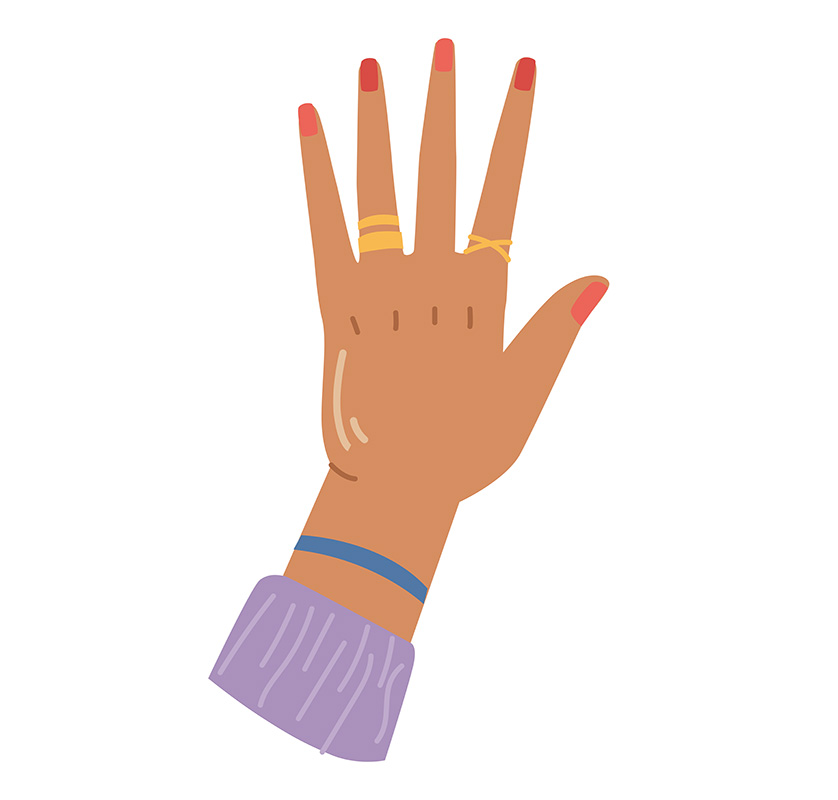
The child was frantic. How could she live with a feather finger? What would happen if her father found out? Her friends? No. She couldn’t let that happen. In her dresser drawer was a pair of white gloves. She slipped them on. “I must keep them on,” she said, “always.”
And she always did. Naturally, her father was annoyed and told her to take them off. Corbelle refused. She was so stubborn that he at last gave up, hoping it was one of those odd fancies that girls have from time to time and that it would quickly pass. But his daughter was never again to be seen without them. She even grew used to the gloves and to the feather. In time, she hardly ever thought of it, or minded it, really. For after all, she did have a golden pin now of her very own. A beautiful pin.
One afternoon, Corbelle was again daydreaming on her front lawn.
“Charming day,” said a voice.
It was Josette.
“Where is your pin?” Corbelle asked, noticing it was missing.
“A stupid bird flew off with it. I was so upset that my dear father agreed to buy me whatever I wished from Le Petit Monde. I chose this.”
She touched the ivory medallion hanging from her throat.
“Four hundred francs, would you believe it? But my father, he loves me so. He calls me his papillon.”
Corbelle was hardly listening. She could only gaze at the medallion.
“Perhaps your father will buy you one?”
“Perhaps,” said Corbelle, a bit doubtfully.
The other girl was about to turn away when Corbelle cried, “Wait!”
Josette raised her eyebrows. “What?”
“Do you like…my gloves?” Corbelle blurted.
“Oh, yes. They’re charming,” said Josette, stifling a giggle. And waving goodbye, she sailed down the street like a paper vessel.
Of course Corbelle asked her father for a pendant, of course he said no, and of course Corbelle, as before, ran to the backyard. As she sat there sulking, she heard a familiar voice. It was the crow.
“What?” it cried. “Don’t tell me it didn’t work!”
Corbelle rubbed her eyes.
“What didn’t work?” she asked.
“The pin. You mean to say it didn’t make you happy, after all?”
The girl shook her head.
“Strange,” said the bird. “Ah, but there’s more to it, now, isn’t there? There’s something else?”
Corbelle was hesitant at first to tell him about the ivory medallion. But at last she did.
“Is that all?” The crow laughed. “Why, I could easily get you a silly little medallion if it would make you happy.”
Corbelle looked at him darkly.
“But…what would you do?” she asked.
“Do you mean what would you have to do for me?”
The girl nodded.
“Nothing at all! Practically nothing!”
Corbelle listened.
“Since you already have one feather finger, it wouldn’t really be much of a difference, would it, to have a few more?”
The child wasn’t sure what to say. She already wore gloves. A few more feathers wouldn’t be such a great change. Should she? Corbelle thought for a while. She imagined how it would look. But when she imagined the ivory medallion around her neck, she could only say, “No. It wouldn’t be that much of a difference.”
“Shall I get it then?” whispered the crow.
“Yes.” Corbelle didn’t even hesitate now.
“Excellent,” said the crow. Off he flew. A minute later her returned, a medallion in his beak. He dropped it over Corbelle’s head. Inside her gloves she felt her fingers grow lighter and longer. But she didn’t really mind. She didn’t even look. It was only a small change. And it would be worth it, after all, to have the medallion.
After that day Corbelle’s life changed. It became as wonderful and strange as any dream or nightmare she had ever had. For it was so easy. Whenever she saw something she desired, she simply had to ask the crow for it; then she’d have it. The crow seemed to follow her like a shadow. And if new black feathers grew weekly beneath her clothes, who would ever know? As she grew older, it wasn’t mere trinkets or clothes that she asked for. It was money. It was power. It was so many great and terrible things that all had to be taken from someone, to be given to her. She had only to ask for them. She had only to give up a piece of herself, forever. It was so easy.
Corbelle is still living, it’s said. She is an old woman, for this is an old story. Her face, I’m told, is like that of so many old women. Only beneath her jewels and elegant clothes are feathers, wings, and talons. And somewhere, it’s whispered, for there must be, is a man. A dark and well-dressed man with broad shoulders, black hair, and the face of–a crow.
the end.
Question Time
1. What did Corbelle want that her friend had?
2. What part of Corbelle’s body turned into a feather?
3. What did Corbelle wear to hide her feathers?
4. What happened to the crow?